
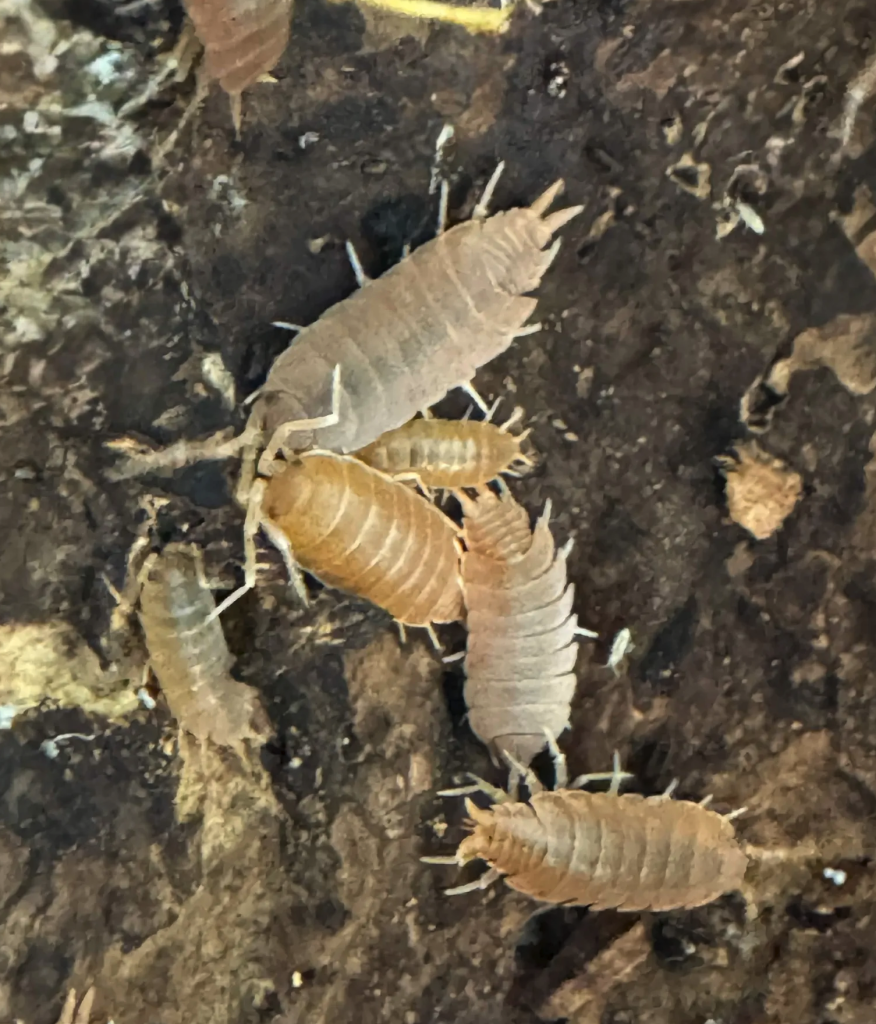
Powder Orange, Powder Blue, Powder Gray, Oreo, Orange Cream, White Out
Porcellionides pruinosus
Overview
The Powder isopods (Porcellionides pruinosus) are a fast, hardy species that comes in a rainbow of color morphs — Powder Orange, Powder Blue, Powder Gray, Oreo, Orange Cream, White Out, and mixed "Party Mix" cultures. Every one of these is the same species with the same care, so this guide covers them all. They are among the best starter isopods available: active, quick to breed, forgiving of mistakes, and endlessly useful as a bioactive cleanup crew.
Basic Care
Keep Powder isopods in a container with a clear moisture gradient. One side should stay damp with sphagnum moss while the other stays drier, so the isopods can choose the conditions they need. Give them plenty of ventilation — many small holes are better than a few large ones, and fine mesh keeps these speedy climbers from escaping.
- Humidity Range: 50–70%
- Temperature Range: 70–80°F
- Difficulty: Beginner friendly
- Activity Level: Bold, fast-moving, and commonly visible
- Breeding: Extremely prolific once established
Setup
Use a substrate made from organic soil, decayed hardwood, leaf litter, and a calcium source, several inches deep so the colony can burrow. Add a pile of damp sphagnum moss on one side of the enclosure and keep plenty of dry leaf litter available at all times. Because these isopods are so active, a well-ventilated lid with fine mesh is important — they move fast and will find any gap.
Food
Their main food should be leaf litter and decaying wood. Because Powder isopods breed so quickly and eat so voraciously, offer supplemental foods a couple of times per week to keep the colony fed and growing.
- Leaf litter
- Decayed hardwood
- Vegetables such as carrot, squash, or zucchini
- Protein foods such as fish flakes, dried shrimp, or isopod food
- Calcium from cuttlebone, crushed eggshell, or limestone
Bioactive Use
Powder isopods are one of the best cleanup crews you can add to a bioactive enclosure. They reproduce rapidly, tear through waste and leaf litter efficiently, and keep up with the mess of larger animals better than most slower species. If you need a strong, self-sustaining custodian population fast, this is the species to reach for — any of the color morphs will do the job equally well.
Extra Notes
Powder isopods are forgiving, active, and perfect for beginners. Their bodies are a little softer than some isopods, so handle them gently and expect them to be quick. Avoid letting the enclosure become completely dry, but also avoid soaking the entire container — the most common mistake is keeping the setup too wet without enough airflow. Note that the different color morphs can interbreed, so if you want to keep a line pure (for example, a clean Powder Blue culture), house it separately from other morphs.